
Can Your Existing Switchboard Support an EV Charger?

Updated: Oct 4

Key takeaways
An EV charger adds a meaningful electrical load and should be assessed as part of the whole home.
Board age, available space, existing protection and overall household demand all matter.
Some homes only need a straightforward new circuit, while others benefit from a switchboard upgrade first.
The smartest order is assessment first, charger selection second.
Why the Switchboard Matters
The switchboard is where the home’s circuits are protected and managed. It is also where an electrician can see whether the installation has the capacity, protection and physical space to support EV charging safely.
A dedicated EV charger is not the same as adding another small appliance. It introduces a steady electrical load that needs to sit comfortably alongside the rest of the property’s demand.
What We Check First
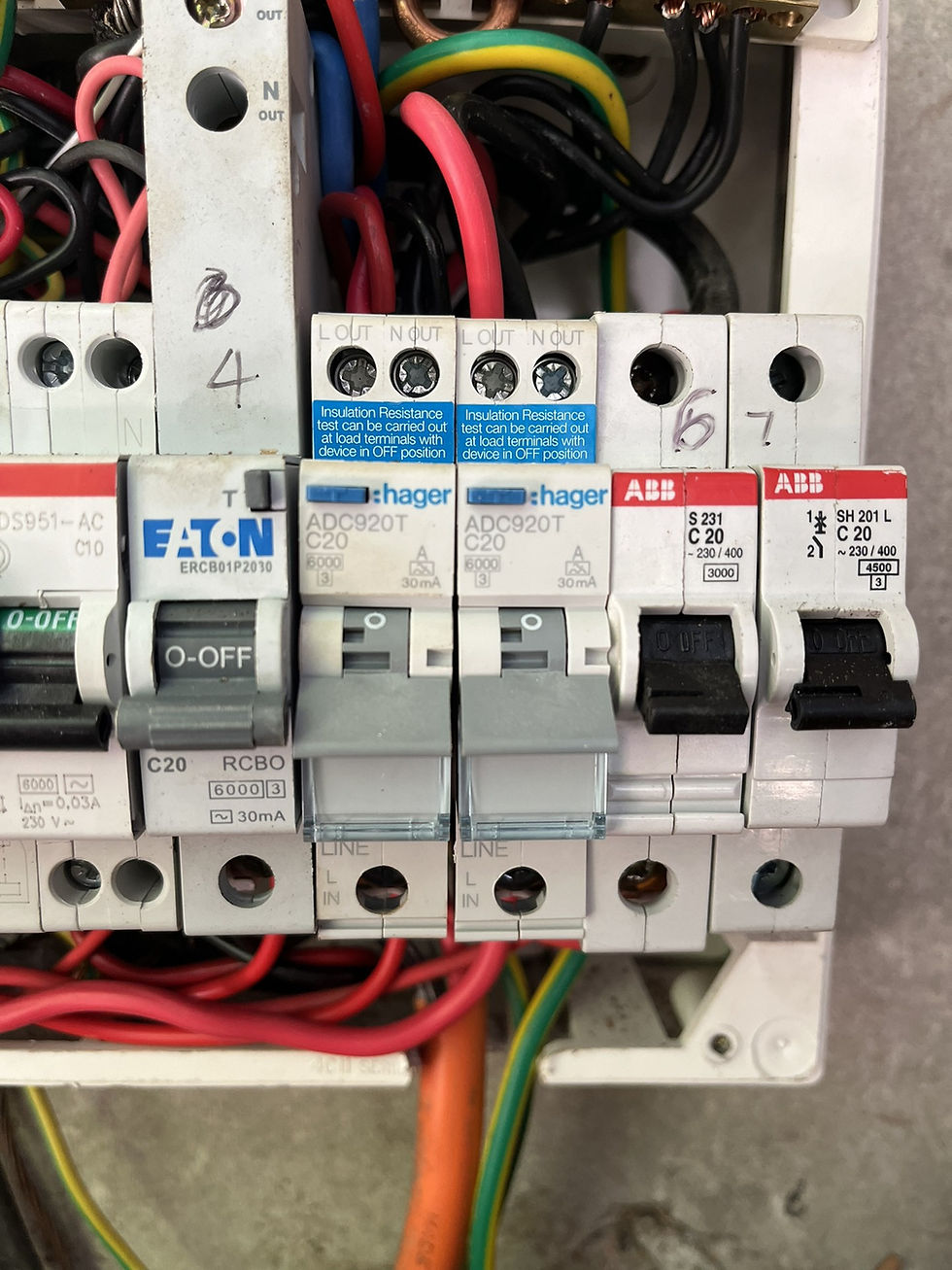
A proper EV charger assessment looks beyond whether there is a spare breaker position. We review the condition and layout of the board, safety protection, likely household demand, whether the property is single or three phase, and how future plans such as solar, batteries or additional major appliances might affect the answer.
We also consider the practical side of the installation: charger location, cable route, exposure, mounting and how cleanly the whole setup can be delivered.
Signs Your Switchboard Needs Attention
A switchboard with ceramic fuses, incomplete safety protection, obvious age, limited space, messy historic additions or repeated nuisance tripping is usually telling you something. Even if the home has managed day to day, it may not be the right platform for another major load without improvement.
That does not automatically mean EV charging is difficult. It simply means the sensible path may involve strengthening the board first rather than forcing the charger onto a weak point in the installation.
Why Older Homes Need a Load Review
Many established homes were built for a lighter electrical lifestyle than the one they now support. Add air conditioning, office loads, modern kitchens, electric hot water, solar and future battery ambitions, and the picture changes quickly.
That is why EV charging should be considered in the context of the full property rather than as a standalone product choice.
Single vs Three Phase Charging
The fastest charger is not always the right charger. In many homes, a sensible single-phase setup suits the vehicle and charging pattern perfectly well. Other households benefit from three-phase charging because their usage, supply or future plans justify it.
The right answer depends on how the home is used, not on marketing language printed on the charger box.
When a Switchboard Upgrade Makes Sense
A switchboard upgrade makes sense when the existing board is outdated, full, lacks appropriate protection or is already the weakest part of the electrical installation. In many cases, that upgrade does more than support EV charging. It also strengthens the home for solar, battery storage, renovations and future appliance upgrades. If broader improvements are already on the horizon, it is often more efficient to address the board properly once rather than revisit it in stages.
Related services and reading: EV Charger Installation, Switchboard Upgrades, Home Electrical Services and Solar and Battery Services.
Assessment Before Charger Choice
One of the most common mistakes is buying the charger first and checking the property second. That order often leads to avoidable cost, awkward placement or compromise. A proper assessment turns the whole decision into a simpler one.
If you are in Frenchs Forest, the Northern Beaches, the North Shore or nearby Sydney suburbs, Pica Electrical can assess your switchboard, explain what the home can support and recommend the most practical charging setup.
Common questions about switchboards and EV charger readiness
Can any switchboard support an EV charger?
Not always. Some switchboards can support an EV charger with little change, while others need upgrades because of age, limited capacity, missing protection, or the way the existing circuits are arranged.
Why does the switchboard matter before choosing the charger?
Because charger choice should follow the electrical assessment, not the other way around. The switchboard and broader supply determine what can be installed safely and what may need to happen first.
Do older homes need extra checks before EV charger installation?
Yes. Older homes often need a load review, switchboard assessment, and planning around other large household loads before a charger is added.
Is single-phase charging enough for most homes?
For many homes, single-phase charging is workable, but the best answer depends on driving habits, vehicle needs, available supply, and what else the home is asking the electrical system to do.
When does a switchboard upgrade make sense for EV charging?
It usually makes sense when the current board is outdated, lacks space or protection, or is likely to become a limiting factor for the charger and other future electrical upgrades.
Related services and reading
How Pica Electrical Can Help
Thinking about home EV charging? Book an assessment with Pica Electrical first so the charger, switchboard and household load all work together properly.


Comments